
Curating in a
digital age
Museum curators and virtual heritage communicators are blending technology with art and history to transform museum experiences across Australia.


Museums are vital spaces for learning about – and connecting with – the past. But in a digital world, curators and artists are firmly looking forward as they embrace innovative technology to encourage genuine interaction with their collections.
Rose Hiscock (TC 1986), Jane Clark (TC 1977) and Brett Leavy all integrate technology into their work to connect meaningfully with their audiences. Their approach reflects a broader shift in the arts and culture sector where modern audiences expect interactivity, accessibility and cultural relevance as part of their museum and gallery experiences.
The future is certainly digital but it’s the artworks themselves that remain the important thing. As Rose notes: ‘Technology is a conduit to knowledge or to an experience or to a broader world, but the emotional reaction is the main game.'
'If the technology is good, it’s invisible. I have a great belief in the original objects, the artefacts, the artwork.'
Rose Hiscock
TECHNOLOGY IS UBIQUITOUS
Rose is the Director of Museums and Collections at the University of Melbourne. She looks after the University’s public facing museums and collections.
‘Technology is everywhere in the work that I do,’ Rose says. ‘Every exhibition has it, and throughout the visitor journeys there are touchpoints at every moment. If the technology is good, it’s invisible. I have a great belief in the original objects, the artefacts, the artwork.’
Rose believes that the digitisation of a collection or an object means it becomes immediately accessible to a much larger audience.
‘If you have a great database of a collection, then anyone in the world who’s researching or wanting to visit can access it,’ she says. ‘We have to think about those collections, especially Indigenous collections, as cultural heritage, cultural knowledge, a demonstration of a living culture, not of static objects sitting on a display shelf.
‘The first stage in that process of rethinking what a museum is has to start with the communities that are represented in those institutions and what their needs are and what their perspectives are. You go from thinking about a thing or an object, to thinking about a person.’
At Trinity, Rose learnt the importance of scaffolding herself with good friends. ‘The nice thing about communal life is that you learn that you’re one individual in a bigger world, and you have to learn how to be yourself through that as well,’ she says. ‘I was studying commerce, and I had an artistic community happening alongside it. That had a real impact on me.’


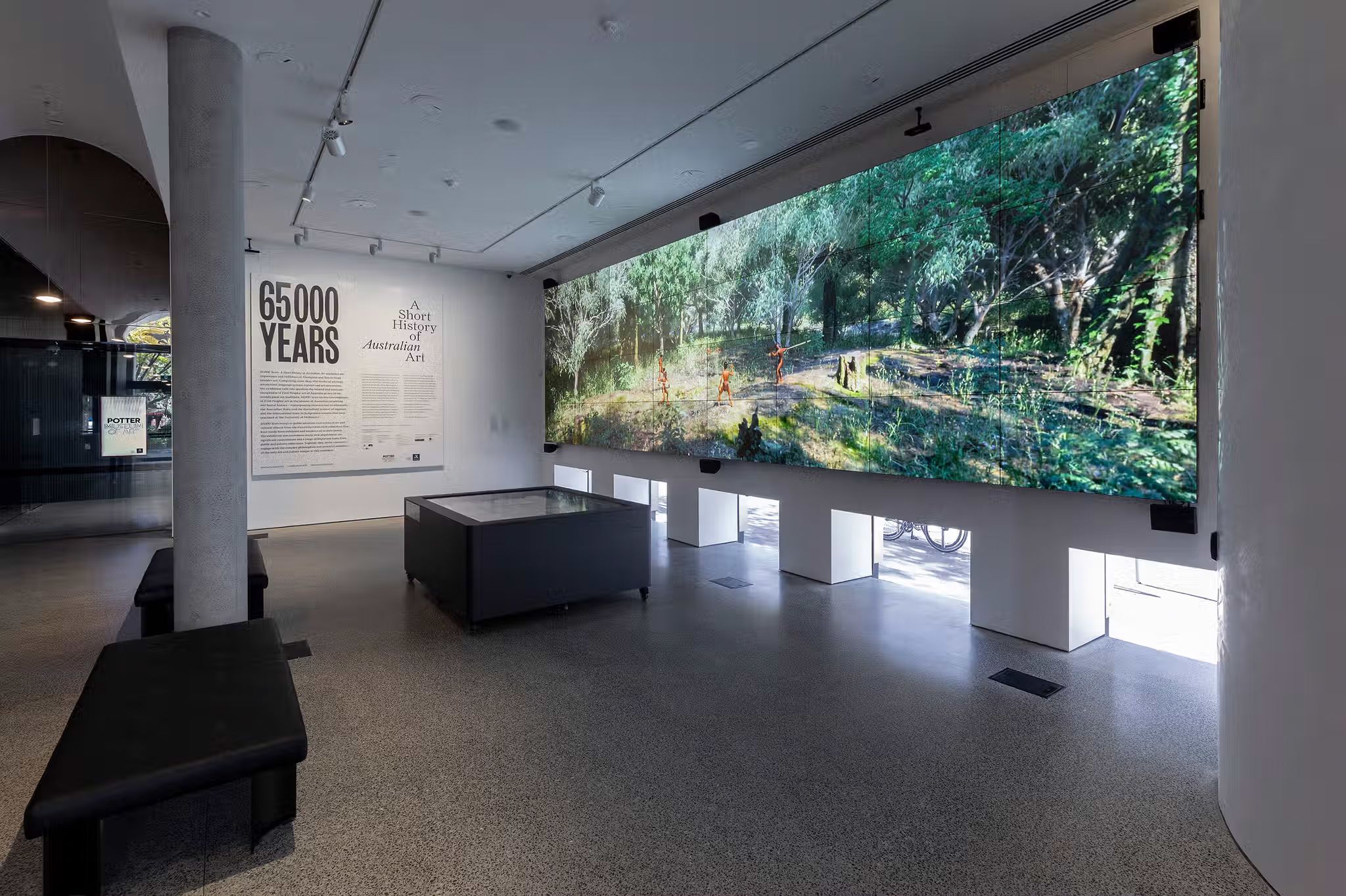
Brett Leavy's Virtual Narrm 1834
Brett Leavy's Virtual Narrm 1834
A FRESH APPROACH
The experience of Jane Clark was similar. She met her husband at Trinity and also developed strong friendships with students from all year levels and disciplines who encouraged her to participate.
‘It’s a place that makes you try things that you wouldn’t have tried before, and you just feel so much more part of the University,’ she says.
By the time she graduated, Jane wanted to work in art museums rather than academia but had no idea that her path would lead her to be instrumental in the use of technology in museums worldwide. A Trinity contact recommended her for her first job at Arts Centre Melbourne, which led to another at the National Gallery of Victoria. She later worked in commercial businesses presenting and researching artworks and writing about them.
But when businessman and art collector David Walsh invited Jane to take on the role of Senior Research Curator at his Museum of Old and New Art (Mona) in Hobart, she jumped at the opportunity.
Jane contributes most of the content in the descriptions on Mona’s ‘O’ app (pictured below). ‘David never wanted people distracted by labels on the walls,’ she says. ‘He also had this idea that he could, with his technical people, invent something that other museums would use as well. His Art Processors technology has been employed by the Australian Stockman’s Hall of Fame, the Art Gallery of New South Wales and the Bob Dylan Center in the USA, but we’re the only people who use it for everything.’

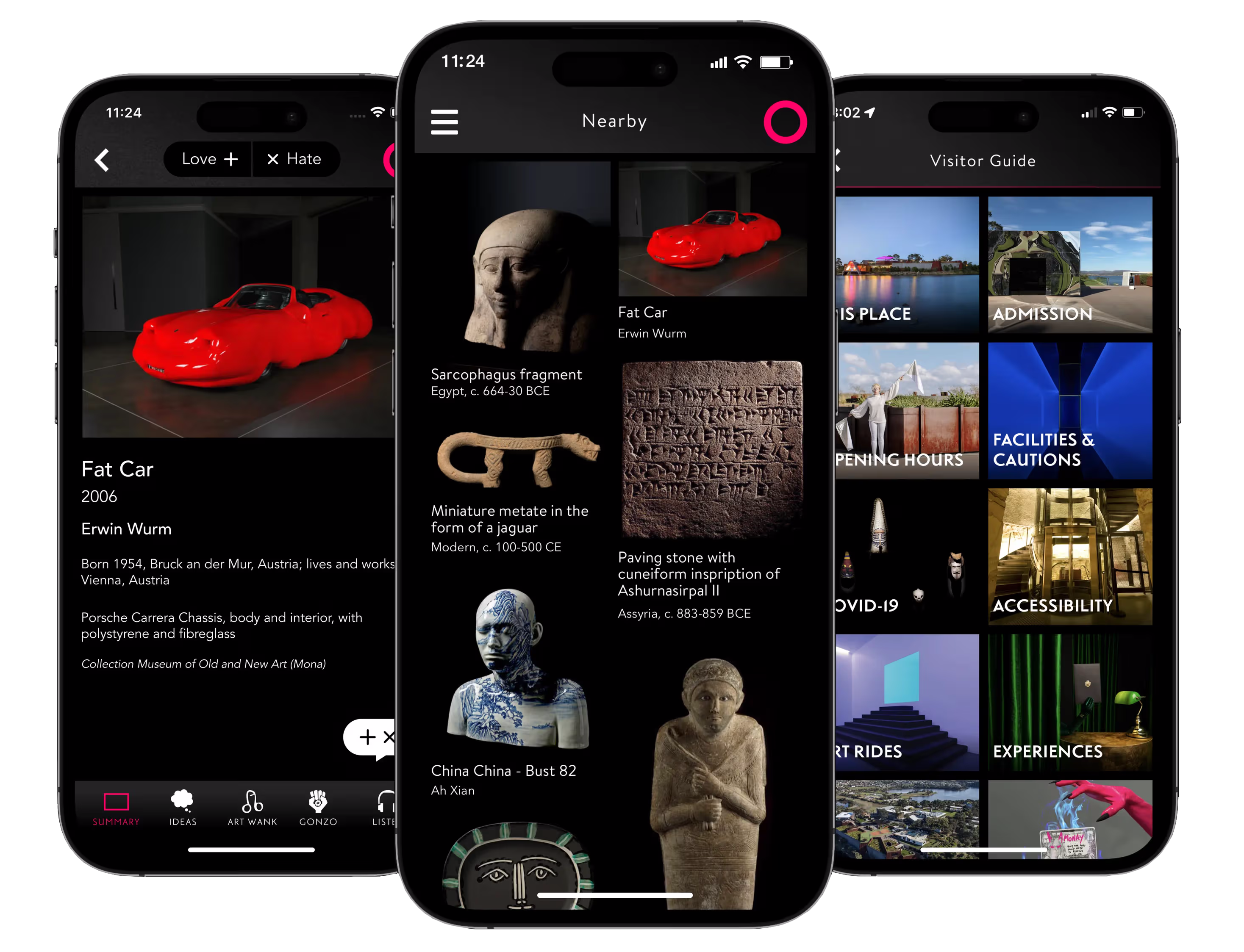
Visitors to Mona have responded very well to the app, she adds, even if some may not use it to its full potential.
‘People wander around and almost forget to use it because they’re engrossed in the art, but because they can save their tour, they can access it when they get home and explore what they missed as well as what they saw.’
VIRTUAL INSIGHTS
Award-winning multimedia digital producer Brett Leavy works at the intersection of technology, Indigenous knowledge, gaming and storytelling. Drawing on the stories and artworks of many Indigenous sources, including works from Trinity’s own Indigenous art collection, he has created Virtual Narrm 1834 for the Potter Museum as part of 65,000 Years: A Short History of Australian Art.
The animation aims to provide a sense of the spirit of Wurundjeri people in pre-contact Narrm, immersing viewers in the sounds of nature and encouraging them to contemplate the consequences of colonisation for the traditional custodians.
Virtual Narrm also draws much from Brett’s previous project, Virtual Songlines, a role-play-based cultural survival game in which individuals can envelop themselves in the landscape of the First Nations people before the arrival of colonial settlers.
His reasoning behind utilising pioneering technology to illustrate the world’s oldest culture is twofold: to create transportive museum experiences and to prove ‘our resilience and adaptability to technologies that raise the profile of First Nations and our underlying science, technology and land management achievements.’
'[Trinity] is a place that makes you try things that you wouldn’t have tried before, and you just feel so much more part of the University.'
Jane Clark
READ NEXT STORY >>> MEET TRINITY'S ARTS ADVISORY GROUP
<<< BACK TO THE MANY ACTS OF MARNEY MCQUEEN
 Built with Shorthand