
Introducing Trinity's ninth Warden
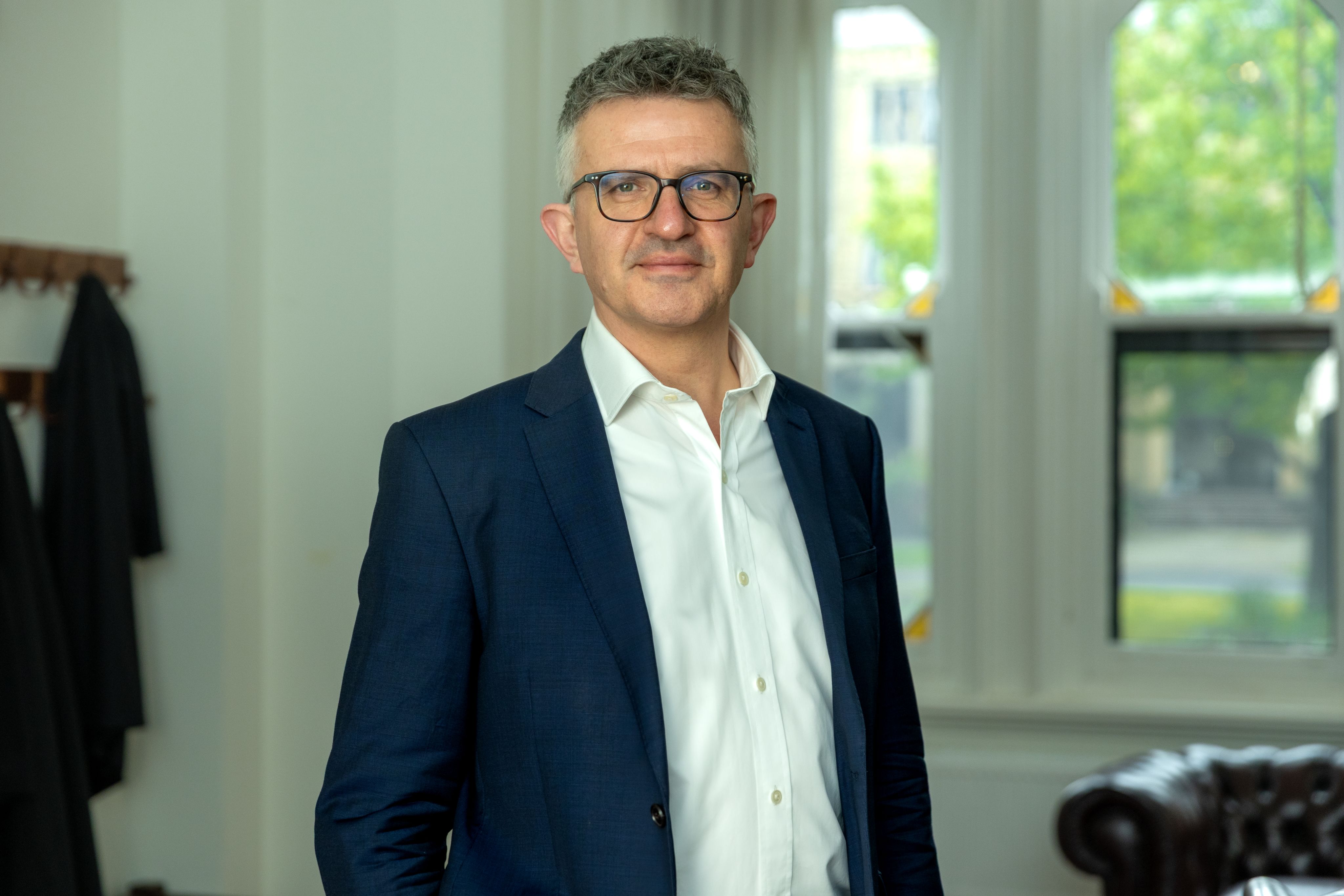

Please tell us a little bit about yourself...
I’m currently Professor of French Literature at the University of Melbourne, where, until last year I was Dean of the Faculty of Arts.
I’m from England – I was born in Liverpool, where my parents and sister still live. I was the first person in my family to go to university: I spent eight very happy years at Keble College at the University of Oxford, studying French and German for my BA and then focusing on French literature for my masters and my doctorate, which I completed in 2000. After my doctorate I took up a lectureship at the University of Leeds in the north of England, where I remained for 13 years, becoming a fully-fledged academic – teaching, researching but also increasingly taking responsibility for strategic leadership. And that led to my being appointed Professor of French Literature and Dean of the Faculty of Arts & Humanities at King’s College London in 2014 – a truly extraordinary place to work, right in the centre of London.
After nearly five years at King’s, I was approached about the amazing opportunity to be Dean of the Faculty of Arts at the University of Melbourne – an institution I’d long admired. So, after coming to Melbourne for the first time in my life in August 2018 for the selection process, I was thrilled to be offered the role. At the beginning of 2019, I moved here, with my partner and our two young children – and the rest, as they say, is history.
What drew you to education in the first place?
What drew me to education was my own experience of being taught by amazing, inspiring teachers at primary school and high school – and I wanted to be like them and do what they did. From a very early age I wanted to be a schoolteacher: my parents have a particularly embarrassing photo of me, when I was 6 or 7, I guess, lining up my teddies in the back yard of our house in Liverpool, getting them ready for their school assembly.
So yes, I always wanted to go into teaching – and I also had amazing, inspiring tutors at Oxford, who gave me the confidence to pursue research and so to become a university lecturer, focusing on teaching and researching French language and literature.
What do you love most about university life and working with students?
I love the sense of endless possibility and discovery: that day by day, in teaching and research, we’re engaged in the fundamental pursuit of truth – asking questions, questioning answers – and that through that pursuit of truth, students learn, not just about their own academic disciplines, but about themselves. It’s the privilege of those who work in higher education that we enable generations of students to become who they are, to be their whole selves – and in that way to make a difference in the world. It’s a noble calling.
What is your connection to Trinity College?
My connection to Trinity College goes back to 2019, when I moved from England to Melbourne to take up the role of Dean of the Faculty of Arts at the University of Melbourne – and also, alongside that, to pursue training for ordination as a priest within the Anglican Diocese of Melbourne, having previously been accepted for training within the Church of England. During my first two years as Dean, I was also studying part-time at the Theological School at Trinity, ahead of my ordination as a Deacon and a Priest in 2021. So I’m a proud alum of Trinity – and the University of Divinity – and I shall always be grateful to Trinity for the difference it made to my life at a time of considerable change and personal fulfilment for me.
What drew you to the Warden role?
I’m excited to take on the role of Warden – to lead and be the public champion of the College – because there’s a really strong fit between the College’s purpose and ethos and what matters to me professionally and personally.
Trinity’s purpose directly aligns with my lifelong commitment to enabling student success and helping communities to thrive.
And Trinity is a values-led institution – an institution where respect, excellence, diversity, inclusion, integrity and belonging are taken really seriously – and they’re all values that I share and seek to live and work by.
They’re values that give expression to what it means to be an Anglican foundation in our present moment, welcoming people of all faiths and none and treating every person with dignity and respect not seeing in others a potential threat to be managed or a problem to be solved but rather acknowledging each person’s unique identity and seeing the gift in them.
Under Ken Hinchcliff’s leadership the College has set a clear direction for the coming years – we see this in the Trinity 2030 plan – to be a modern and enduring college that is centred on students, focused on staff and outward-looking in everything it does. The College’s vision – to be a vibrant, diverse, inspiring and inclusive community – is one that really resonates with me.
I can’t think of a better place to work at than Trinity College.
What do you value most in a community like Trinity?
What I value most in a community like Trinity is precisely that – community. It’s the sense of belonging. A strong community is one where everyone belongs – not because everyone’s the same, because they’re not – not because everyone is like-minded, because they’re not – but because everyone is like-hearted, having a desire to listen across differences and to understand themselves and others more deeply.
Another thing I really value about Trinity is that it’s a very diverse educational institution – even an educational institution like no other – with the Pathways School, the Residential College and the Theological School – so we have diversity within and between those three discrete but interrelated parts, but also a sense of unity around what Trinity is and what it stands for. It’s a unique place – and that’s really exciting for me as Warden.
Who or what has shaped your approach to leadership?
The main thing that has shaped my approach to leadership is the so-called Golden Rule – a fundamental principle of Christianity, though it’s found elsewhere too – of treating others as you would want them to treat you.
Leadership is, at its heart, about people – and about relationships between people: a good leader is one who knows their people, who is close to them, who respects them and who understands and values what they’re doing; a good leader is one who uses that knowledge of their people to inspire them with a truly collective, shared vision; and a good leader – and this is the glue that holds everything else together – is one who wants the best for their people, who serves them and helps them flourish.
There are schools of leadership thinking that have helped me develop my approach: I’m thinking of the Oxford Character Project, for example, which explores the values and purpose that are central to good leadership; I’ve had the good fortune to work with and for inspiring academic leaders in the UK and Australia; and I’ve also been inspired by leaders outside academia, such as the former Prime Minister of New Zealand Jacinda Ardern, who showed the importance of empathy and kindness in leadership.
What are you hoping to achieve as Warden?
During my time as Warden I want Trinity to be the very best it can be – and I want students and staff to have the very best possible experience here.
I want the College to be more than the sum of its parts: with the Pathways School, the Residential College and the Theological School, we are an educational institution like no other – and we have the potential to be a real intellectual and cultural powerhouse.
So we can and should make more of that unique profile: we should increase the reach and impact of the College and ensure that we’re known throughout the world for living out in bold and sustainable ways our distinctively Anglican ethos of service and public citizenship with a genuine concern for the common good and a deep-seated commitment to working to make the world a better place.
I want Trinity to set the standard globally for what it means to put inclusive excellence in service of society, to pursue social justice, including just relations between Indigenous and non-Indigenous people, and to shape change for good in the communities that we’re part of and serve.
All of our students and staff across the Pathways School, the Residential College and the Theological School have a role to play in that – and so do our alumni. There are so many possibilities – and there’s so much to be optimistic about!
What kind of culture do you want to nurture at Trinity?
The kind of culture I want to nurture here is a culture of diversity and inclusion, of mutual respect, of generosity, of kindness. And a culture of ambition: yes, ambition on the part of individual students and staff members who want to succeed in their studies and their careers, but also ambition for us collectively, for what we can achieve for society at large – the difference we can make in the world – when we truly live out our values.
What are your passions and interests outside of work?
When I’m not working, I love reading, especially contemporary poetry. I love listening to classical music. I’m actively involved in the life of the Anglican Church, of course. I love walking – we’ve recently got a little rescue dog, so there’s lots of walking! I love going to the coast, being on the beach. I’m an aspiring stand-up paddle boarder – and the aspiring bit is to be able actually to stand up on it.
How would your friends and colleagues describe you in three words?
Curious, compassionate and committed.
What's something people might be surprised to learn about you?
People might be surprised to learn that I have a tattoo, which I got last year for my 50th birthday. Also, that I’m obsessed with buying knick-knacks and things for the kitchen at op shops!
What is your favourite spot on the Trinity campus?
My favourite spot on the Trinity campus is the Chapel. It’s an oasis of calm. A place soaked in prayer. A place where music matters – and as a student in Oxford I sang in Chapel Choir, so it reminds me of that. It’s also a place, with its many memorials, that reminds us that we follow in the footsteps of others – that we stand on the shoulders of giants – and that my responsibility as Warden is to be the custodian of this College just for a time – and to hand it on in even better shape than when I took responsibility for it.
What are you most excited about as you step into this new chapter?
I’m really excited about getting to know everyone at Trinity – meeting the students as well as all the staff who make the place run like clockwork – and meeting our alumni too. I’ve got a great memory for faces – less good for names – so please bear with me. And if you see me in College, come and say hello.
Is there anything else you want to add?
Thank you to Kirsten Gray, Chair of the Board and the selection committee, as well as the College Board and the College Council, for entrusting to me the role of Warden of this wonderful institution.
And congratulations to Ken Hinchcliff on everything you have achieved as Warden during the last ten years. It is an honour and a privilege to succeed you.
 Built with Shorthand