INFORMING
THROUGH ART
Trinity Today 2025 | By Ben Thomas

NURTURING INDIGENOUS ART AND CULTURES
A mellow glow shimmered on the floorboards as a fire crackled quietly in the corner of the Junior Common Room one autumn evening in April 2008. Those gathered listened intently to the softly spoken Rärriwuy Marika, an artist and teacher from Yirrkala in north-east Arnhem Land, as she talked about Trinity's growing collection of artworks by her family members, and how they linked to the Yalangbara Creation story.
‘There are three ways to express or convey traditional knowledge,’ she explained. ‘Design, music, and dance ... Our Creators gave us our law and our ceremonies and we still perform them in the same way.’
2007 stands as a key year in Trinity’s evolving engagement with Indigenous Australia. The groundwork had been laid years earlier when the University of Melbourne Chancellor Fay Marles (JCH 1944) visited Yirrkala and was introduced to Rärriwuy and her aunt, senior Yolŋu law woman Langani Marika. A cultural visit to Melbourne was proposed and, in May 2007, Rärriwuy and Langani stayed at Trinity as Visiting Indigenous Fellows.
UNDERSTANDING
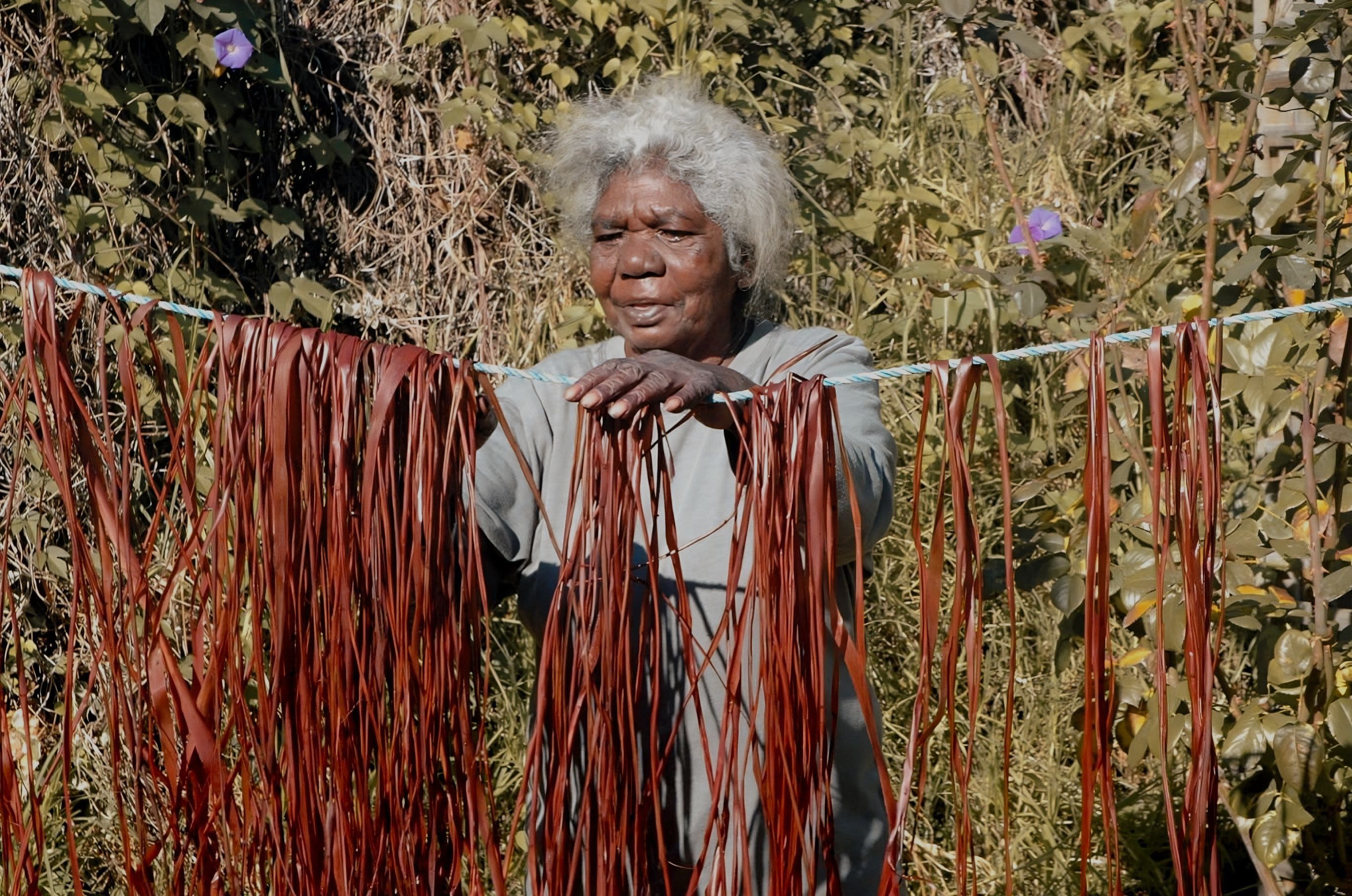
In the overgrown garden on Trinity’s southern boundary (now the site of the Gateway building), Langani introduced residents to traditional dying of pandanus fibres for weaving, and over a series of Sunday afternoons (pictured above), aunt and niece shared with the College community the Yolŋu understanding of the land, law, art and spirituality.
Among several Indigenous initiatives undertaken by the College that year, the Marikas' visit was seen as ‘the most dynamic and exciting of all’, according to Trinity’s then-Indigenous Programs Officer Dr Jon Ritchie, as it showed the potential for spreading the educational message throughout the Trinity community.
The resident-led ER White Club commissioned Rärriwuy to produce a painting for the student collection. Milngurr – the Sacred Water Hole from the Dhuwa Creation at Yalangbara was unveiled in the Dining Hall the following April when Rärriwuy returned, accompanied by her aunt, Ms D. Marika, an accomplished artist in her own right. Ms D. Marika’s painting – Yalangbara II – had been gifted to the College by Jan Martin, owner of Lyttleton Gallery in North Melbourne, in November 2007.
In the following years, more works by Ms D. Marika, her family and the wider community were added and a decade later, the growing collection of Yolŋu art at Trinity would be framed as the Miwatj Collection, adopting the Yolngu term meaning ‘first light’. These deeply felt, entwined connections lie at the heart of Trinity’s Indigenous art engagement, an important visual expression of an infinitely rich cultural tapestry.
Earlier in the year, Dr Ritchie’s appointment led to the publication of a booklet, Indigenous Perspectives. ‘It reports on the current status of Trinity’s Indigenous Perspectives Program and provides a recommendation for the next steps towards our mission of increasing access to the best possible higher education for Indigenous Australians,’ he wrote at the time.
That engagement deepened quickly. During December 2007, 22 young Indigenous secondary students from across Australia participated in Trinity’s Young Leaders summer school program, offering a foretaste of College life and a glimpse of a pathway beyond school. At the end of the program, students from the Areyonga community in the Northern Territory gifted the College a painting titled Learning Different Cultures, which they had completed while in residence.

CROSS-CULTURAL EXCHANGE
Indeed, cross-cultural exchange has been a prevailing undercurrent in Trinity’s approach, with the College sending groups of residents to the remote Indigenous settlement of Minyerri, Northern Territory, each year since 2004, while bringing students from Minyerri to Trinity’s summer school programs.
For many, it was an experience that was both challenging and extending. ‘Up here, futures in general are hard to imagine,’ Minyerri Senior Secondary School’s Melissa Coad wrote after visiting, ‘and for these kids it seems like the future is almost impossible to believe in.’
An alum of the University of Melbourne herself, Melissa had accompanied three female students to Trinity for the summer but was left amazed at the difference she had noticed in the girls. ‘To see Carol, Roddy and Desley be challenged and, in so many ways, rise to the occasion was fantastic and ... I can see how the Trinity experience has mattered.’
REVERBERATIONS
The shared experience between Indigenous and non-Indigenous Australia has indeed mattered, with the deepest reverberations often felt outside the public gaze. For Jerome Cubillo (TC 2009), a Larrakia resident from Darwin, being part of the group that visited Minyerri in 2011 was profound.
‘Up here, futures in general are hard to imagine... and for these kids it seems like the future is almost impossible to believe in.’
‘Being able to travel ... with a group of Trinitarians and host them on my traditional land was incredible, and seeing other students engaging with my community made me especially proud of my culture,’ he noted.
EXHIBITIONS
'Design, music, and dance ... Our Creators gave us our law and our ceremonies and we still perform them in the same way.'
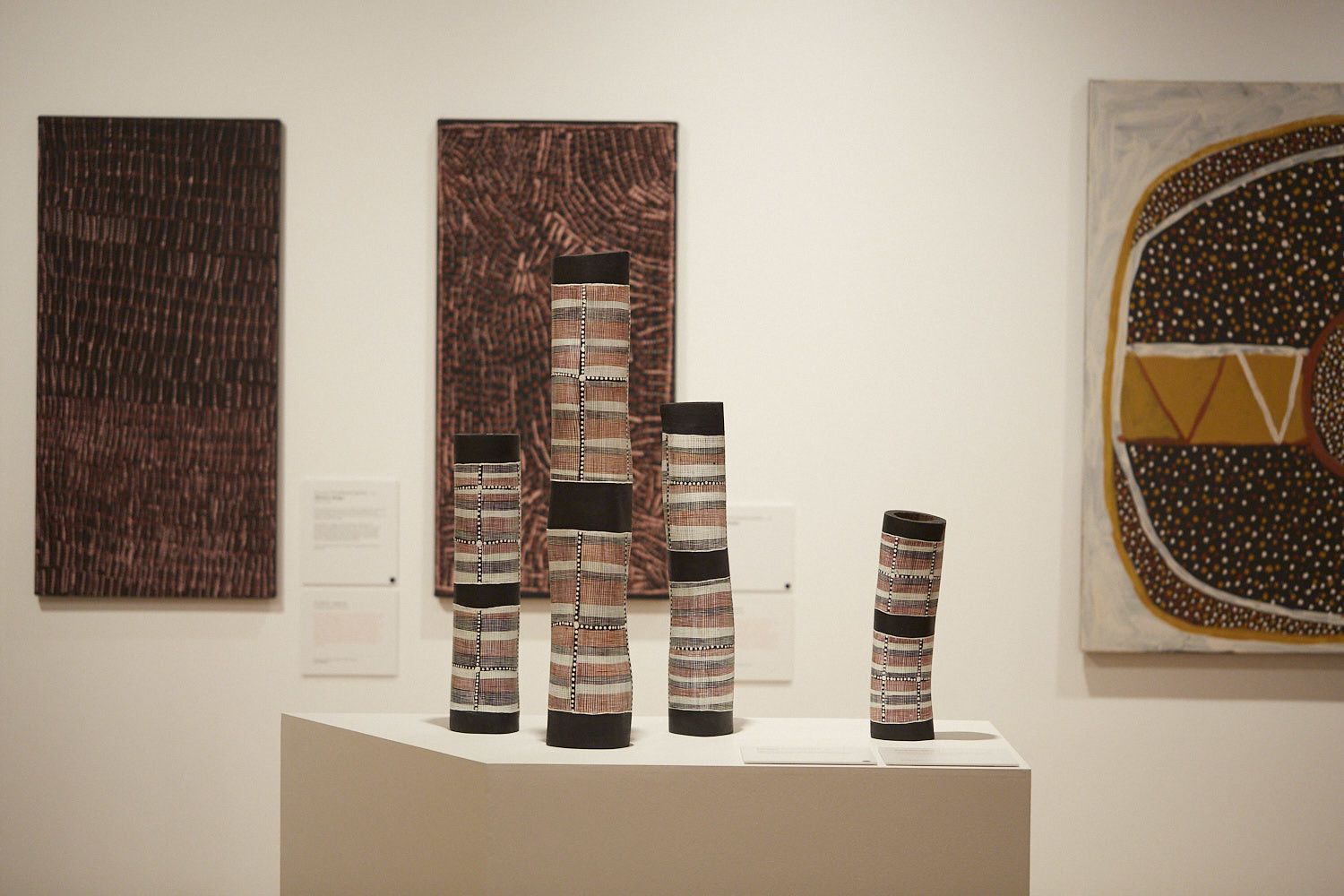
Meanwhile, First Light, celebrating Trinity’s growing Yolŋu art holdings, became the inaugural exhibition in the Burke Gallery, opening in August 2016. Having commissioned Rärriwuy Marika a decade earlier, the ER White reprised the theme in 2017, purchasing a larrakitj pole by artist Noŋgirrŋa Marawili. Curatorially, further works through the Yirrkala Print Room were added to Trinity’s collections.
In 2018, the College partnered with the Melbourne Indigenous Transition School (MITS) to produce Barring-bul, an exhibition of artworks drawn from the various communities of MITS with the proceeds used to support its inaugural scholarship.
A significant loaned collection, Revealed: Arnhem Land Barks from the Anita Castan Collection – Yirrkala and Milingimbi (2019), was followed by contemporary Indigenous Yolŋu print art, Balndhurr (2020), although the latter was cut short due to the COVID-19 pandemic.
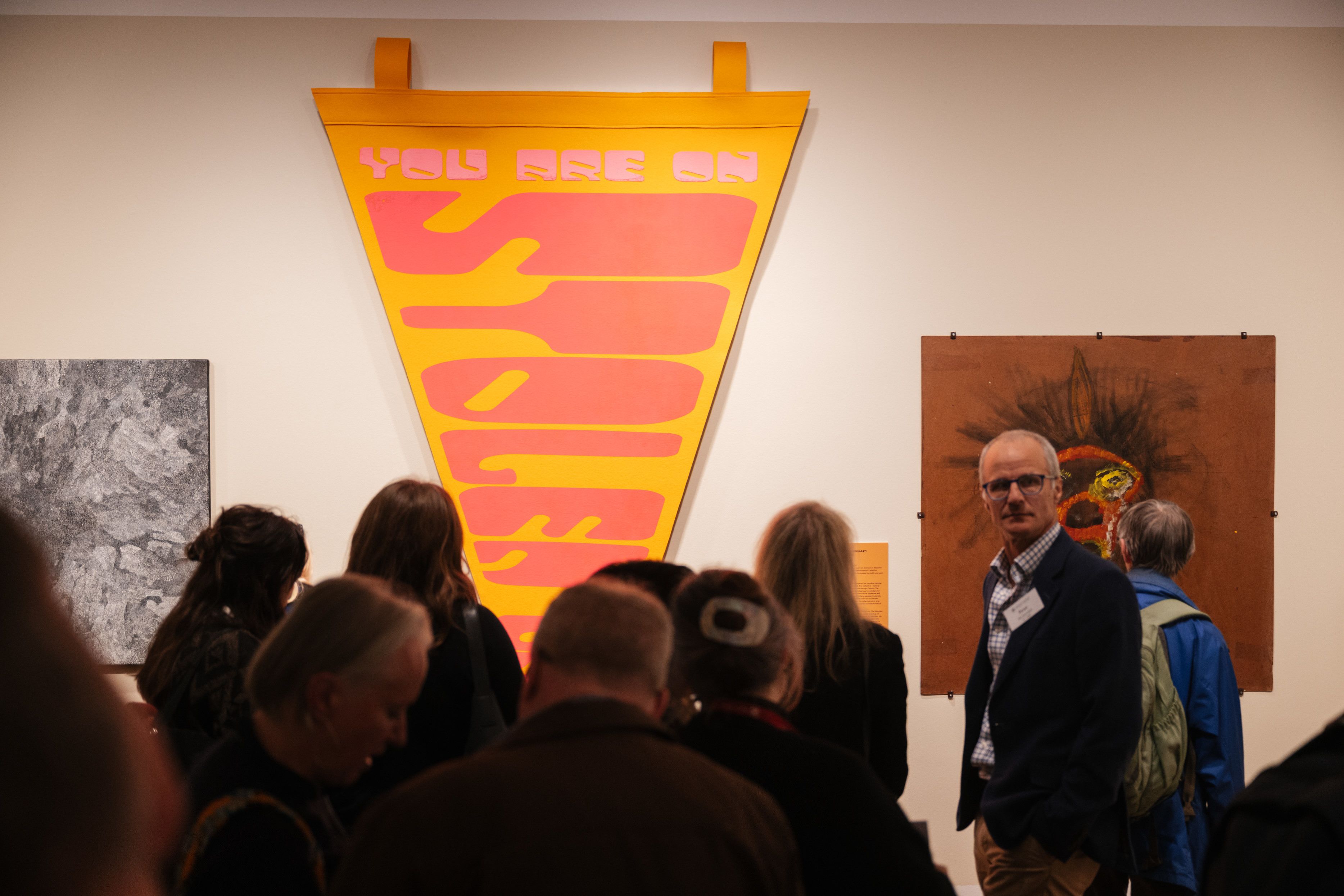
This year, Our Way – a collaborative exhibition of contemporary Indigenous art curated in partnership with the University of Melbourne – opened in the Burke Gallery. Co-curator Shanysa McConville, an eastern Arrernte woman, is herself an alumna of the Bachelor of Arts (Extended) program, developed by Trinity to provide greater access for Indigenous residents coming into tertiary education.
Our Way complements the landmark exhibition 65,000 Years: A Short History of Australian Art at the Potter Museum of Art. In its own way, the event speaks to the next steps to be taken in Trinity’s engagement with the process of reconciliation: of shared dialogue, of storytelling, of listening. In the quiet of the Burke Gallery, that is exactly the exchange that can be experienced.

READ NEXT STORY >>> CREATE TO COMMUNICATE
<<< BACK TO THE SECULAR AND SACRED
 Built with Shorthand