
The secular &
sacred
Recently retired Trinity College Theological School theologian, lecturer and Anglican priest Dorothy Lee talks about her debut poetry collection.
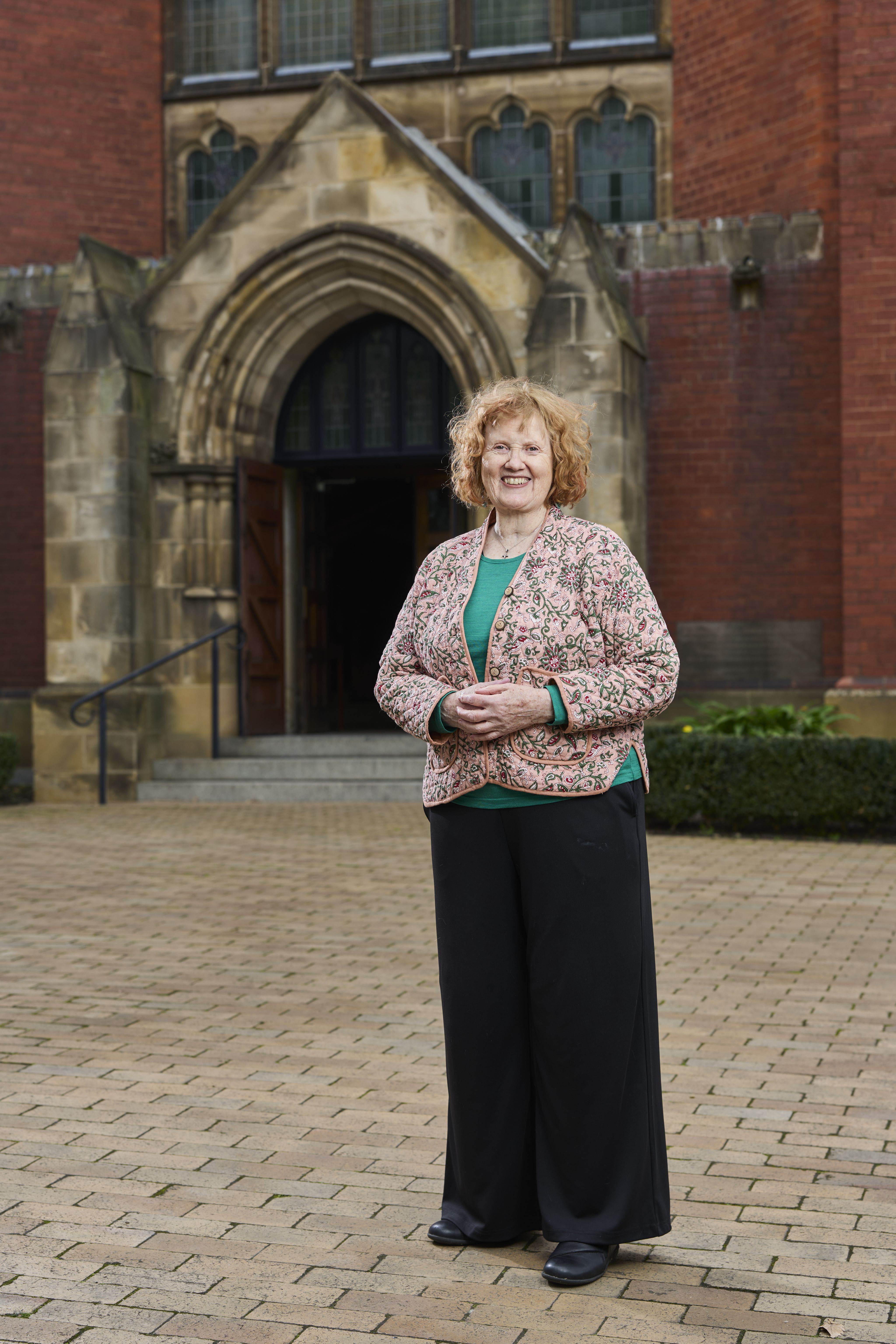

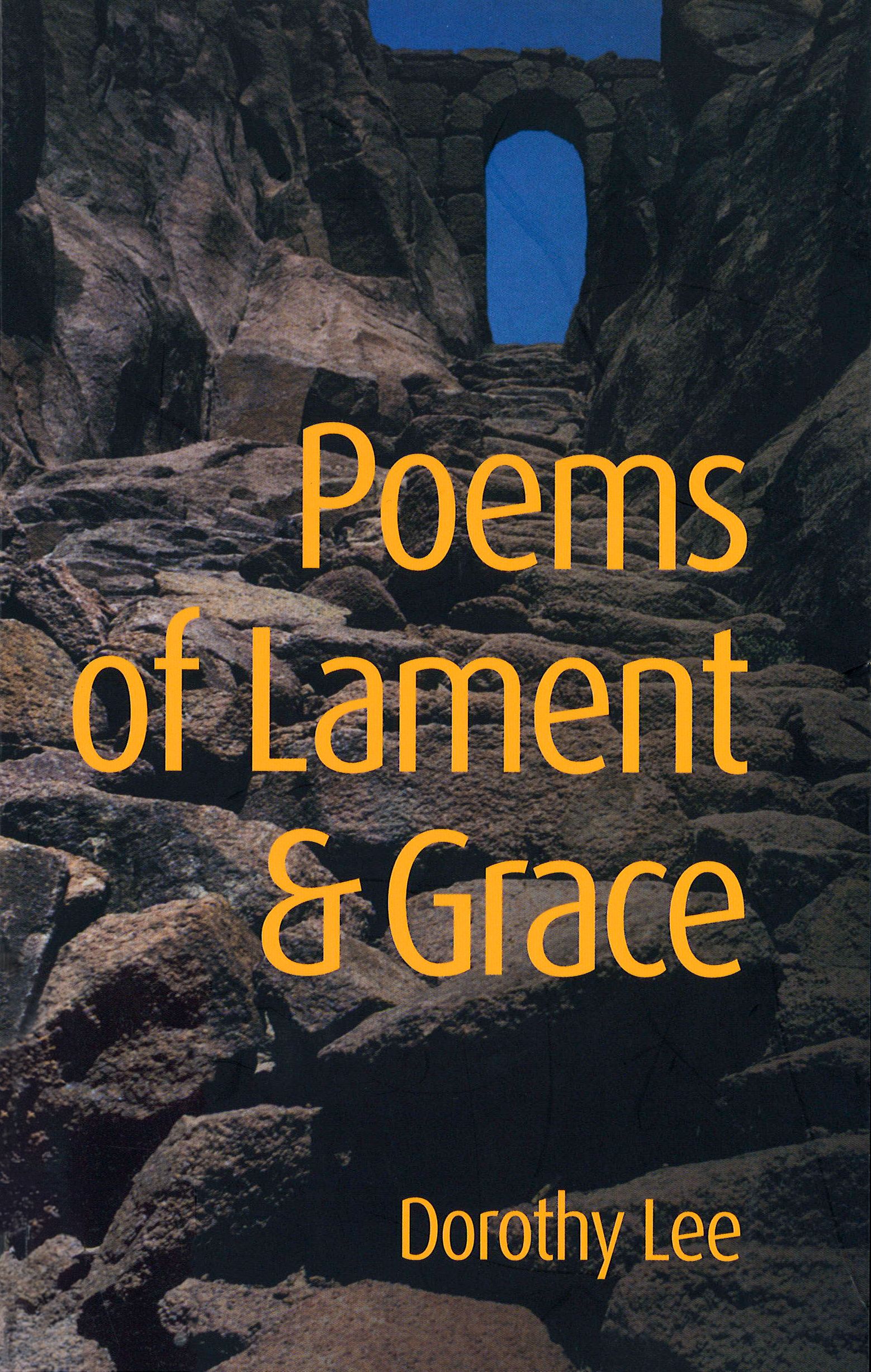
A familiar face at Trinity College, Dorothy Lee spent 17 years engaging in lecturing, research and leadership. Now, she has published Poems of Lament and Grace, a collection that spans two decades of her life and which she sees as complementary – rather than separate – to her professional roles.
‘It’s a new thing for me to share my poems publicly but I found the atmosphere at Trinity, particularly within the Theological School, both flexible and encouraging, and that gave me the impetus, if not the courage, to attempt publication,’ Dorothy says.
Moreover, she doesn’t consider poetry as a departure from her usual interests, having always read and written poetry, ‘and my academic work has often been concerned with poetic themes, such as symbolism’, she adds.
She is drawn to the essence of poetry and how stylistically it differs from prose. ‘I think poetry, in a sense “launders” language: it cleanses, renews and refreshes our everyday speech,’ she says. ‘It deliberately moves behind clichés and familiar forms of expression to articulate something deeper that strives to be universally human. ‘Poetry is more succinct, concertinaed, compact. Narrative is usually more leisurely and takes its time, with quite different literary strategies.’
What one derives from poetry and whether it resonates with an individual depends, of course, on whose poetic voice is heard. Dorothy is conscious of the importance of context. Historically, she points out, ‘white middle-class males have taken it upon themselves to speak universal truths on behalf of everyone else. Yet, our experiences in relation to gender, sexual orientation, race and class are very diverse.'
‘I hope I may have caught a glimpse of something universal in my creative work.'
‘I’m conscious, for example, that I’m writing as an educated woman with a Scottish background. I hope I may have caught a glimpse of something universal in my creative work, but I acknowledge it’s a limited perspective.’
How would Dorothy herself describe Poems of Lament and Grace?
‘A short collection of poems that explore what seems to be contrary modes: with themes of loss and longing, heartache and joy, failings and hopes,’ she says. ‘It also surveys some of the figures of the classical world, from ancient Greece, that still have the capacity to speak to us today.’
Some contemporary poetry can come across as lofty and impenetrable, but this book was written with a general audience in mind and doesn’t presume any specialised knowledge.
‘My hope is that readers may be able to identify with the themes and find their own heart responses articulated,’ Dorothy explains. ‘So often people feel lonely and disconnected when going through difficult times. Maybe these poems can help them; I also hope readers are moved by the poems and may even enjoy them!’
Dorothy acknowledges that her journey to faith has been paved with times of doubt, apprehension and even dismay, but also with the corollary of redeeming moments of grace and gratitude. She demurs, however, when asked whether it was difficult to give an even-handed balance to the two emotions.
‘The poems do describe hard times as well as moments of joy and delight,’ she says. ‘I don’t think, however, that I set out to achieve an even balance between the two. Quite a few of the poems reflect challenging times in my life that are, I hope, mostly in the past. My more recent poems, since the book was published, tend to be more positive.’
In one of the poems, Dorothy talks about turning ‘ill-formed copy into liquid prose’ and ‘base born metals into gold’, but transforming ideas into words can be a challenging verbal alchemy.
‘Usually, a sentence forms in my mind with an image at its centre and I write it down and leave it for a while’ she says. ‘Then I come back to it and enlarge the image and work towards a rhythm that coheres with it. I’ll finally come back to polish it.'
The themes and subjects of Poems of Lament and Grace are far-ranging with Dorothy deftly moving from a tableau of painting dolls under her mother’s eye, to admiring parakeets – ‘the larrikins of the aviatic world’ – to the travails of Persephone, Ariadne and Antigone. But the decision to portray poems that canvas the minutiae of modern life as well as the world of Greek mythical figures, she points out, was organic rather than deliberate.
As for whether the collection tends more towards religion rather than embracing a more secular viewpoint, Dorothy says: ‘Some poems are more explicitly “religious” than others, though most express a kind of spirituality more universal, and not tied to any one religious expression.
‘I believe “secular” and “religious” experiences mirror each other ... poetry makes possible the crossing of boundaries between the secular and the sacred, the ordinary and the mystical. Poetry is by nature porous and openhearted, less concerned with religious dogma than with the depths of human experience.’

READ NEXT STORY >>> INFORMING THROUGH ART
<<< BACK TO MEET TRINITY'S ARTS ADVISORY GROUP
 Built with Shorthand