
The truth in fiction
Trinity Today 2025 | By Robbie Byrne with Laura Kennedy
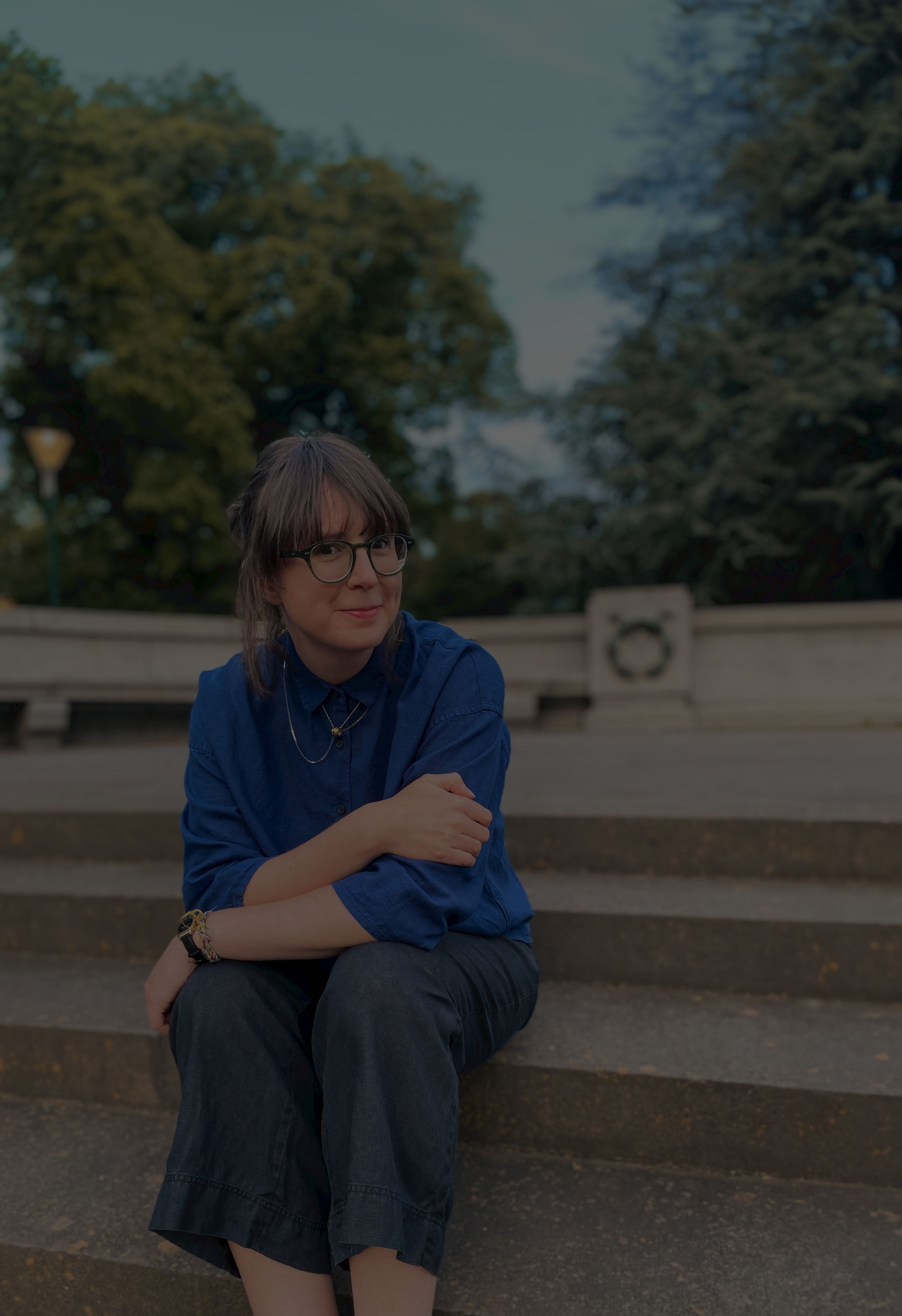

Author Nell Pierce (TC 2006) explored the fine line between fact and truth in her debut novel. Now a mother and living in Melbourne, she’s eagerly exploring new themes.
‘I have grown to love secrecy,’ once wrote the most quoted of quotable writers, Oscar Wilde. ‘It seems to be the one thing that can make modern life mysterious.’
For author and publisher Nell Pierce (TC 2006), it is the thrill of holding on to a secret which compels her to write. ‘I’m a hoarder of the work,’ she jokes. ‘If I share it with other people, the impetus for telling the story is less. I didn’t share my novel with my partner until after I knew it was going to be published – and he’s a writer!’
If I had written Nell’s debut novel, the Vogel Literary Award-winning A Place Near Eden (Allen & Unwin, 2022), I too would have wanted to keep it all to myself. Set in Eden, NSW, a seaside town from Nell’s childhood, the book explores the fine line between fact and what our memory perceives as truth. It is a tense, complex and accomplished work – a story almost too good to share.
'A short story is like looking through a gap in a door. You see a bit of a room, and you imagine the rest; a novel is a more involved project.'
Conscious or otherwise, the examination of fact and truth was likely inspired in part by Nell’s concurrent Bachelor of Arts and Bachelor of Laws studies at the University of Melbourne. Her initial ‘vocational focus’ was law, admitting she didn’t see herself ‘so much as a writer’ during this formative time. However, it was the range of learning that only an arts degree can provide which sparked Nell’s love for creative writing.
Jumping from the cold cadence of legal jargon to creative writing wasn’t exactly a natural transition. Nell confesses that her earliest work ‘wasn’t groundbreaking, wasn’t great stuff’ and that it took a ‘lot of study and a lot of work’ to sharpen her writing skills.
Sharpen it she did. Following a brief stint in family law, Nell moved to New York where she studied a Master of Fine Arts in Fiction Writing at the New School. Once completed, she utilised her skills as a literary agent, where she helped aspiring writers.
Despite helping those around her to get published, Nell admits that for her it ‘seems a little narcissistic to even be writing’.
Perhaps it’s through this unease that she found comfort in exploring the weight of truth; a moral trade off of sorts. ‘I’m trying to convey something that I’ve felt and put that into a story ... which I hope would be relatable and applicable to other people.’
Part of this relatability is down to the realism of Nell’s characters in A Place Near Eden. Be it Tilly’s erratic insecurities or Celeste’s risk-loving confidence, there is something tangible in these people – people we have all met in life.
Nell says that the inspiration to build such characters doesn’t so much come from those around her but from within. Writing, she says, is a process of ‘interrogation’ which enables her to examine uncomfortable truths.
‘I put a lot of myself into these characters,’ she says. ‘I try to put in the more unlikable parts of myself or parts that make me uncomfortable to see what that looks like.’

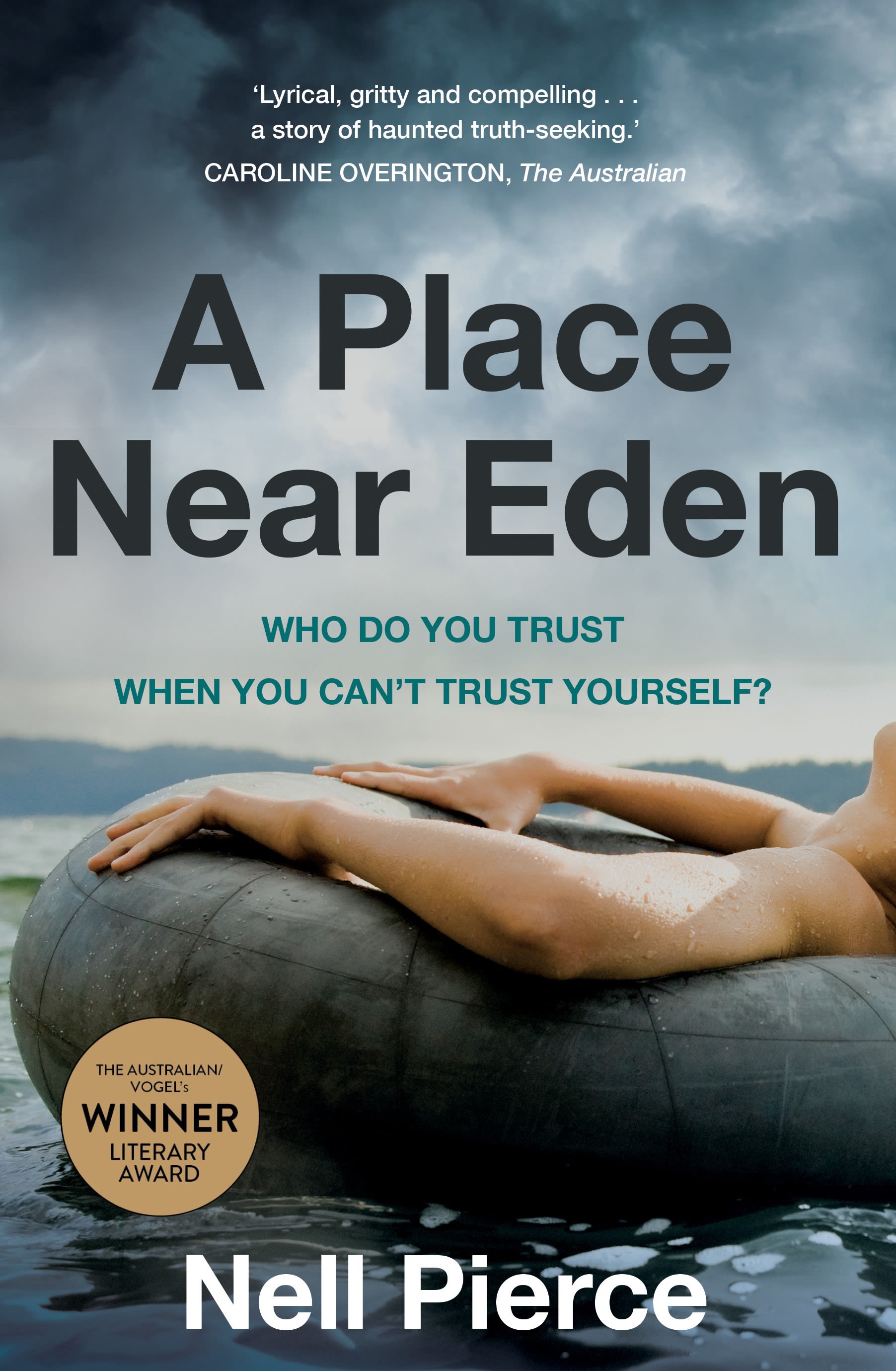


Eden, New South Wales
Eden, New South Wales
‘Those experiences have shifted the way that I think about my family and mother-child relationships,’ she says. Nell’s latest work, The Dawn, published in The American Scholar, is emblematic of this shifting world view. Familial, the story examines loss and the importance of home routine and ritual in coming to terms with grief.
What is also striking is Nell’s shift to the short story format, a style she says involves a different reader approach.
‘A short story is like looking through a gap in a door,’ she says. ‘You see a bit of a room, and you imagine the rest; a novel is a more involved project.’
The recent resurgence of the short story format has been well documented. Though her evidence is anecdotal – ‘I still see people reading books; I see people with attention spans’ – Nell believes that there’s life left in the traditional novel.
Be it an aid or a threat, the rise of artificial intelligence (AI) programs has the potential to drastically alter the publishing space. As we spoke to Nell, Japanese novelist Rie Qudan was garnering press attention for her prize-winning book Sympathy Tokyo Tower, which was written in part by generative AI.
Though cautious, Nell remains hopeful.
‘There’s so much focus on the potential that things are going to be dire and maybe I’m not seeing all the dire things that are already happening,’ she says. ‘But I honestly think ... AI has something to offer us.’
Still, artificial intelligence is no substitute for human creativity.
‘Imagination is the generative source of everything,’ says Nell. ‘From progress to innovation, understanding and empathy. Only we [humans] can imagine into the worlds of others.’
READ NEXT STORY >>> ART IMITATING LIFE
<<< BACK TO CREATE TO COMMUNICATE
 Built with Shorthand