Trinity walking
art trail
Take a walk through Trinity's finest pieces of art


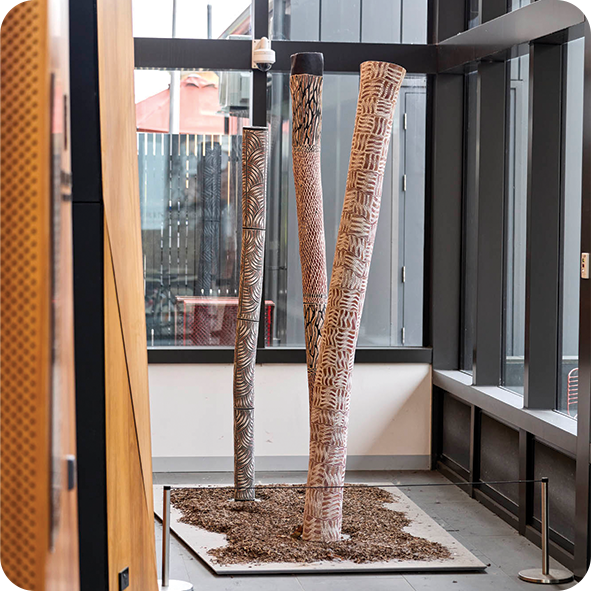
Yathikpa, by N. Marawili, 2013
This Indigenous 2.5-metre-high larrakitj, or memorial pole, was painted by the Yolŋu artist who is viewed as a critical figure in breaking down gender barriers as, traditionally, these clan designs were the exclusive province of men.
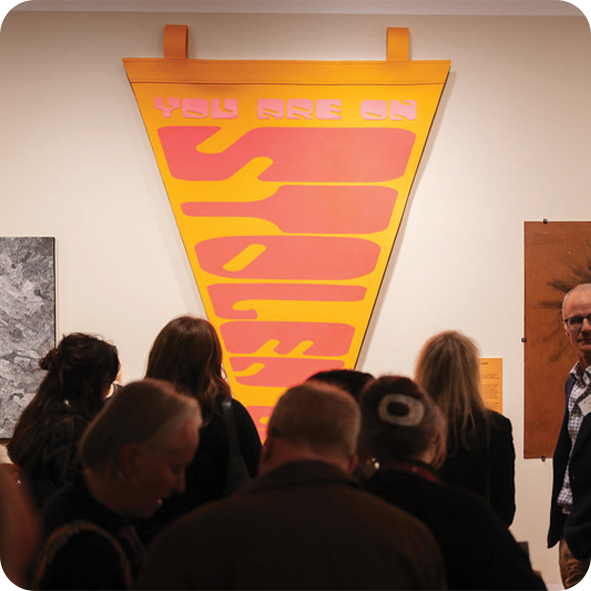
Professor Sir Joseph Burke Gallery, opened in August 2016
‘The Burke’ emphasises the importance the College places on providing a rich and stimulating cultural environment. Previous exhibitions include Woop Woop (2017); All That You’ve Loved (2024); and, most recently, Our Way (2025), an exploration into how Indigenous artists are reimagining storytelling today.
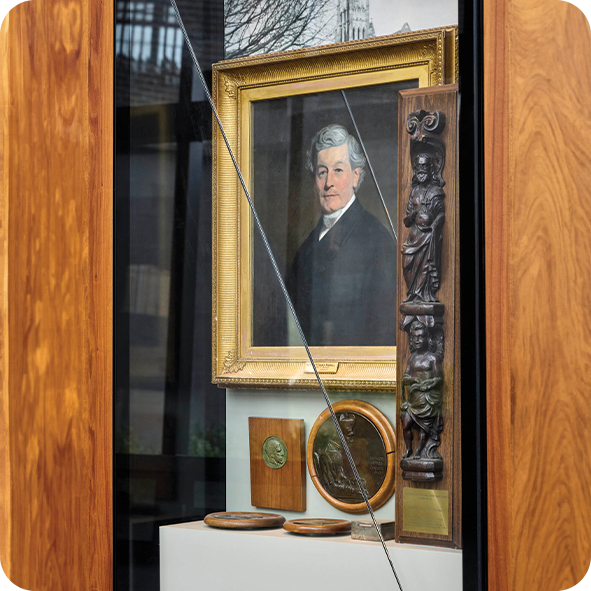
Oak decorative carving, 17th century
This Indigenous 2.5-metre-high larrakitj, or memorial pole, was painted by the Yolŋu artist who is viewed as a critical figure in breaking down gender barriers as, traditionally, these clan designs were the exclusive province of men.
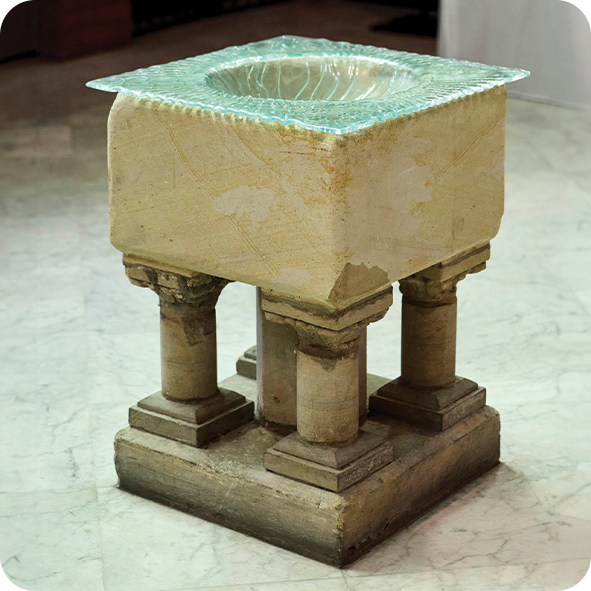
The ‘Henty’ font, unknown, pre-1580. Glass font 2005 & 2022, by David Wright
One of the oldest ecclesiastical objects in Australia, this font (possibly of Norman origin) was removed from a church in West Sussex in 1829 by Thomas Henty before his voyage to Victoria. It was likely used in Portland, before being moved to St James’ Old Cathedral in Melbourne in 1842. It was replaced in 1845, after which the font lived a nomadic existence. In 1969 it arrived at Horsfall Chapel. The font was initially topped by a stainless-steel bowl and wooden cover until 2005 when David Wright was commissioned to design a piece. The resulting glass insert illustrates a flow of water leading to a ‘water hole’, symbolising new life and baptism. The font glass was damaged, and replaced by David, in 2022.
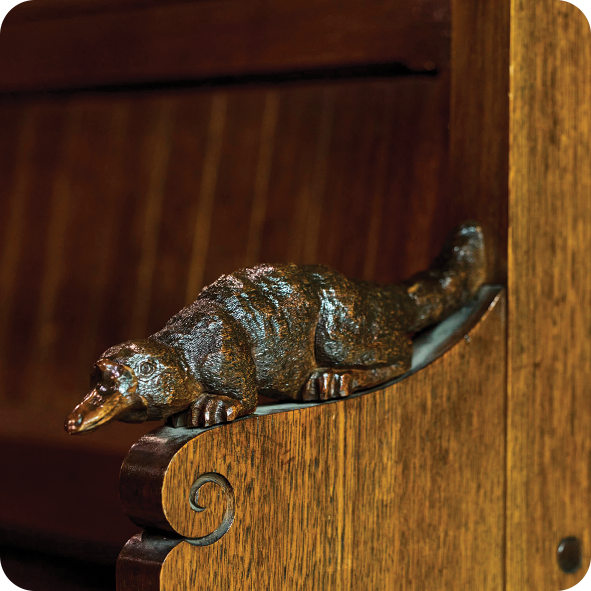
Possums, platypuses and bandicoots, by Robert Prenzel (1920s) and Eva Schubert (1980s)
Prenzel, one of Australia’s finest 20th century woodcarvers capped the pew ends based on designs from Chapel architect Alexander North. Three of these were stolen in the 1980s but successfully replaced by Eva Schubert’s own unique design.
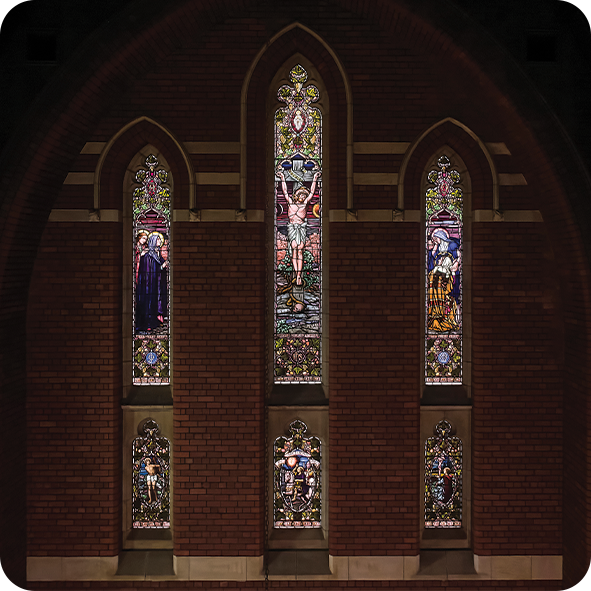
Chapel windows, various, 1916-1998
Tap here for more info.
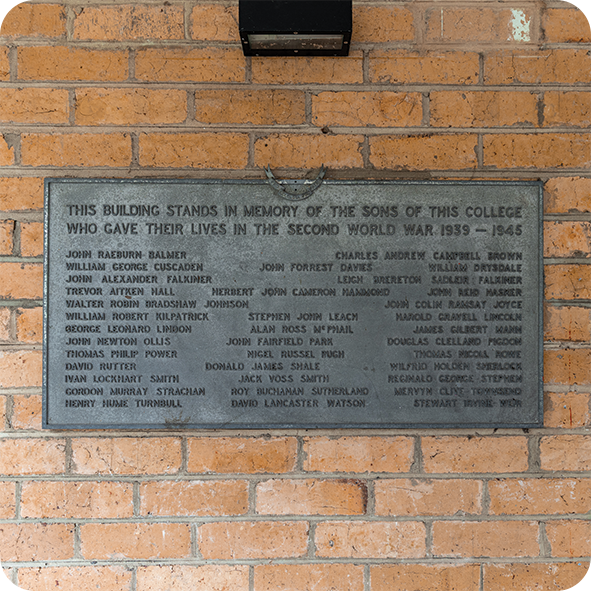
Trinity College & WWII Memorial, by McGlashan Everist, 1958
Situated on the north wall of Jeopardy, this cast alloy memorial panel features the names of 33 alumni who perished during WWII. It is embellished with a ribbon design and the words, ‘Pro Ecclesia Pro Patria’.
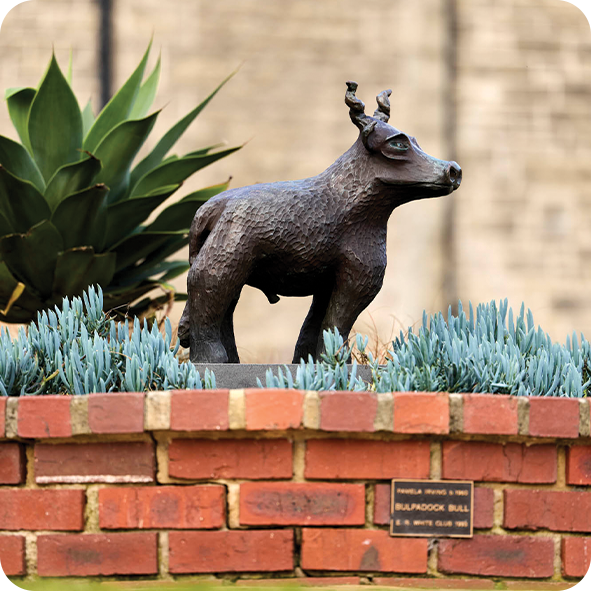
Bulpadock Bull, by Pamela Irving, 1993
Well known at the time for her bronze-casting of animals, Iving’s design pays homage to its namesake, which until the 1960s housed Trinity’s dairy herd. The Bull has been stolen on numerous occasions (by neighbouring colleges which shall go unnamed), resulting in it being permanently fixed to the ground.
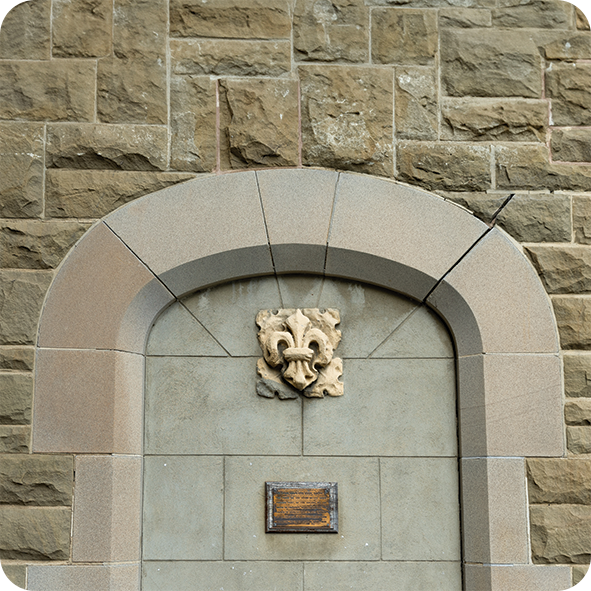
Fleur de Lys, by unknown
This stone carved in the form of the Fleur de Lys was once part of the façade of the House of Commons, Westminster. It was removed during renovations and acquired by an alum of Trinity, before its donation in 1939.
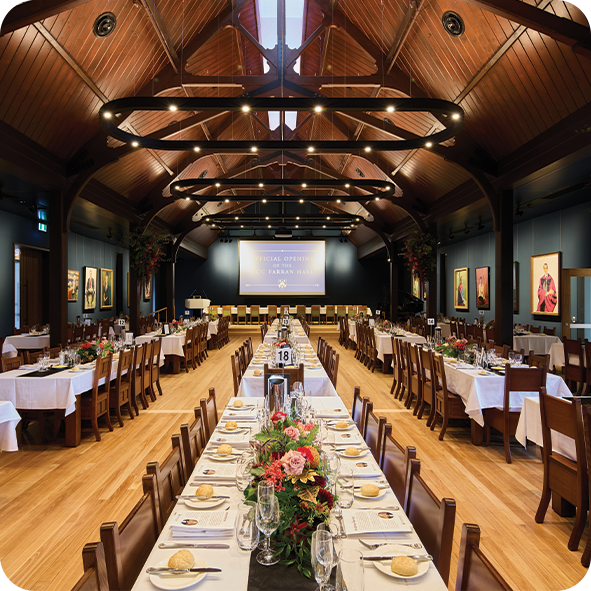
A C C Farran Hall
The undisputed heart of the College has been restored to its former glory following an extensive renovation. The hall displays more than 40 artworks featuring wardens and notable benefactors.
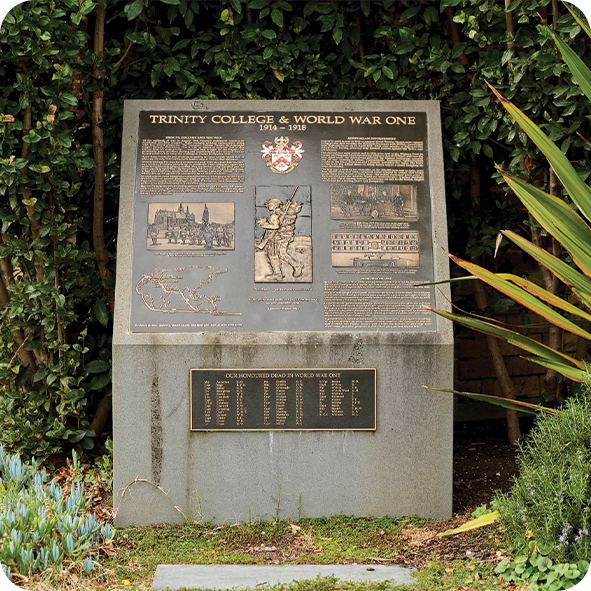
Trinity College & World War I Memorial, by Ross Bastiaan, 2017
Cast by Trinity alum Ross Bastiaan, this intricate memorial details the Commonwealth of Australia and Trinity's involvement in WWI along with a synopsis of the war itself. The memorial lists the names of 42 alumni who perished during the war.

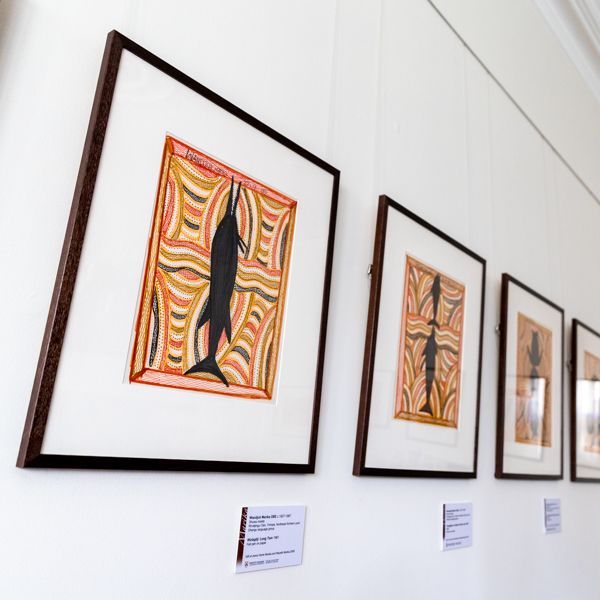
Djan'kawu Creation Story, by Wandjuk Marika OBE, 1981
This suite of important works by the Yolŋu painter, actor, composer and Indigenous land rights activist tells the Djan'kawu Creation Story. The use of felt pen on paper is unique for the artist during this period. The series has been held custodially by the College in partnership with the Marika family since 2008.
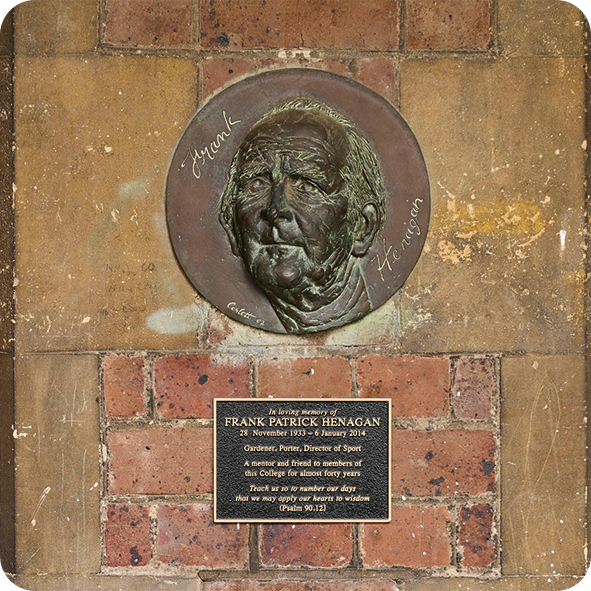
Frank Patrick Henagan Medallion, by Peter Corlett, 2002
The medallion was struck in honour of the long-standing Trinity gardener, porter and director of sport.
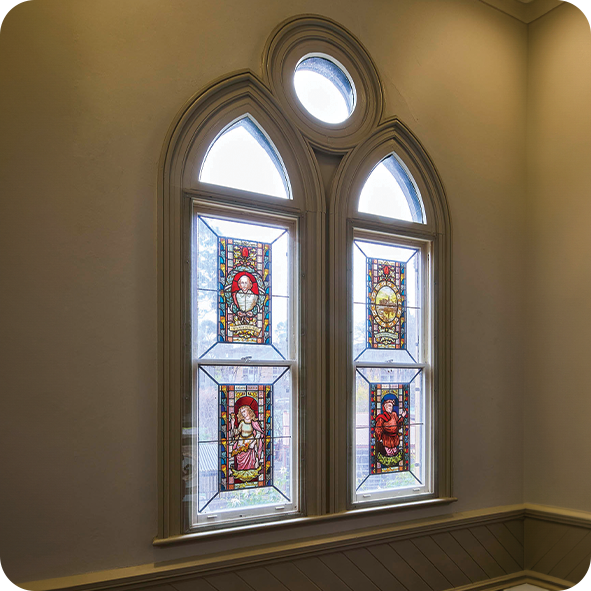
Shakespeare Windows, by William Montgomery, c.1891
Tap here for more info.
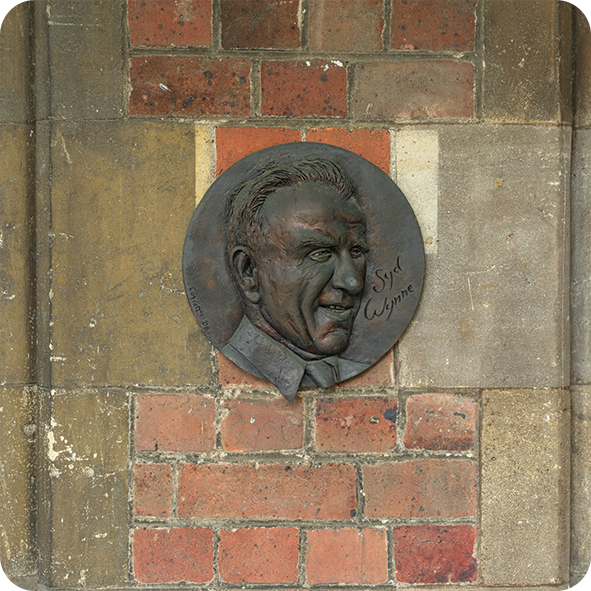
Syd Wynne Medallion, by Peter Corlett, 2008
Trinity’s preeminent overseer, Syd worked at Trinity for half a century from 1920 to 1970, succeeding his father Sydney Snr.
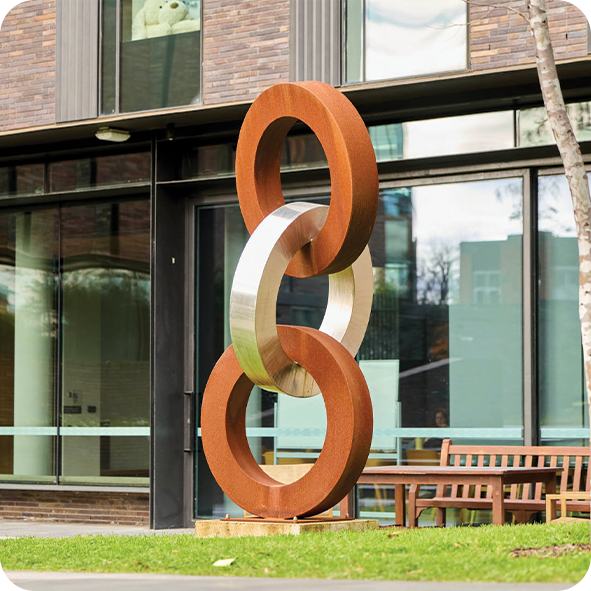
United, by Lachlan Ross, 2021
Commissioned with the objective of ‘celebrating and complementing’ the newly built Dorothy building, the piece reflects the connection, unity, diversity and strength of the Trinity community.
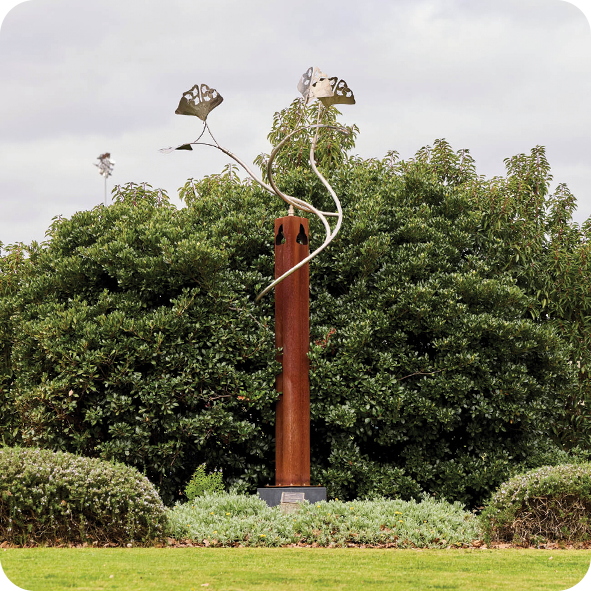
Ventulus, by Rudi Jass, 2015
Adopting the Latin term for ‘gentle breeze’, Jass drew upon the symbol of the trefoil, a feature that appears on some of Trinity’s earliest buildings. A column of rusticated steel takes its profile from this motif that represents the Holy Trinity, with the same emblem cut at the column’s upper edge. Branches terminate in broad gingko leaves (a symbol in Asian cultures for longevity), which move in the breeze.
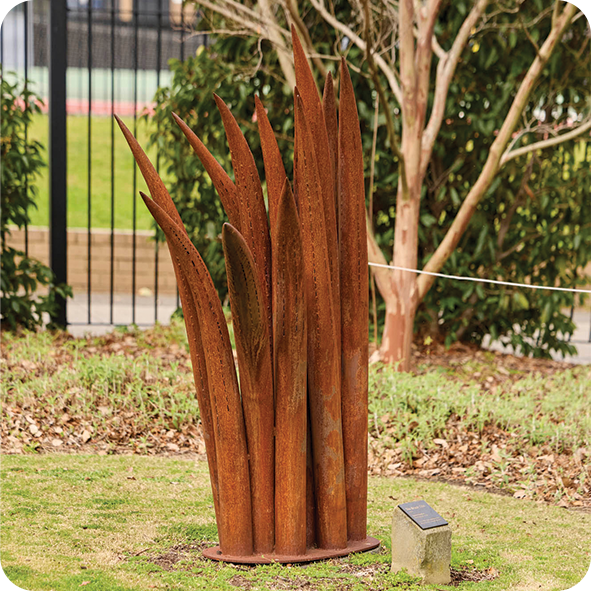
The Brush, by David Hamilton, 1994
The Brush showcases the Tasmanian-born artist’s adeptness in transforming steel into seemingly organic shapes that reflect his native island’s diverse flora and fauna.
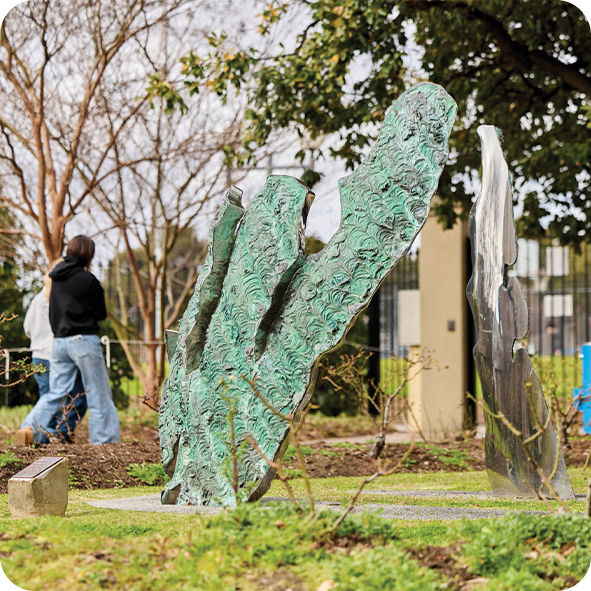
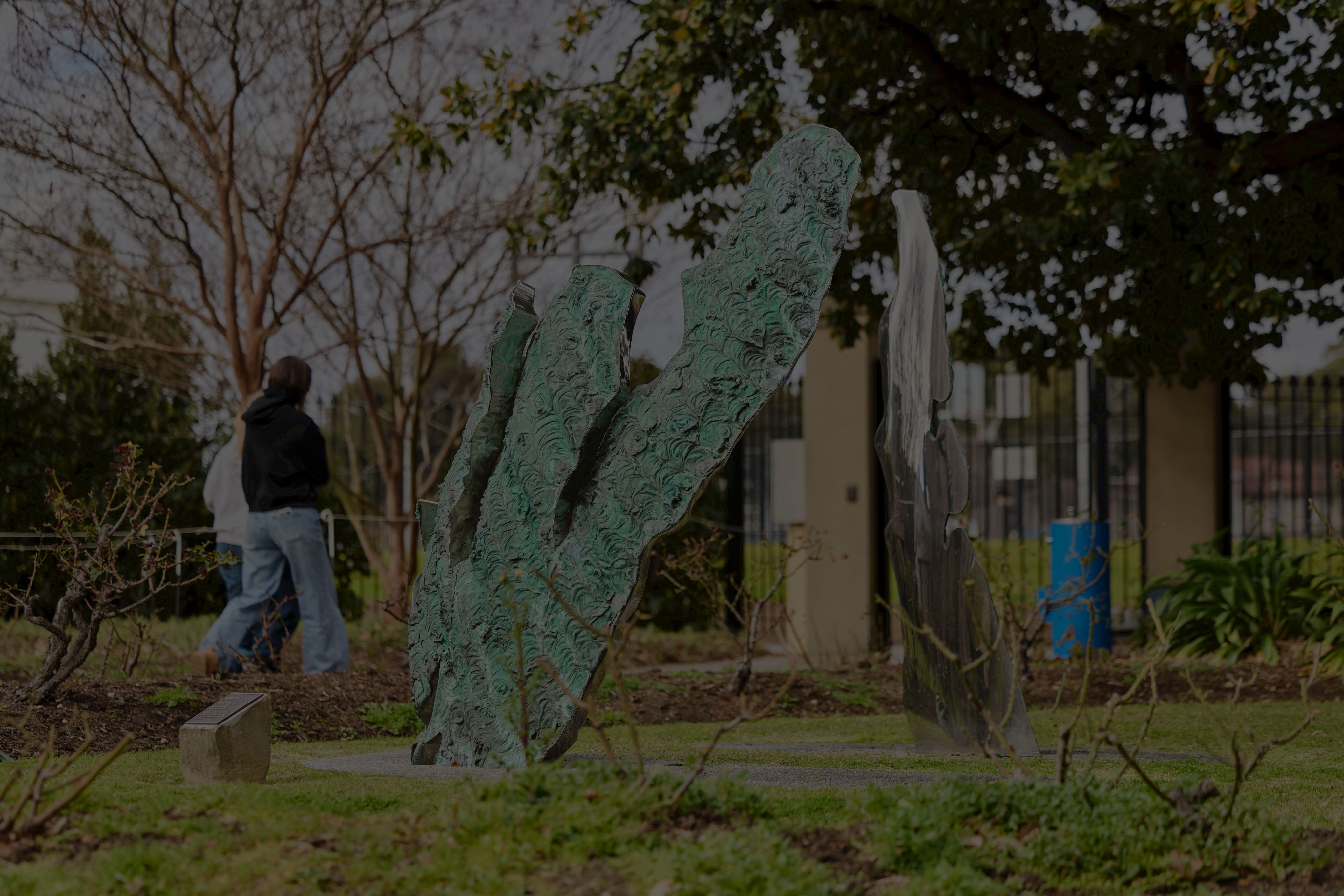
Untitled, by David Abecassis, 2004
This work of stainless steel and cold cast bronze blades, taking the form of eucalyptus bark, was initially loaned to Trinity by David. The passing of his friend and fellow alumni architect Alan Nance prompted the artist to formally gift the work to the College in 2024.
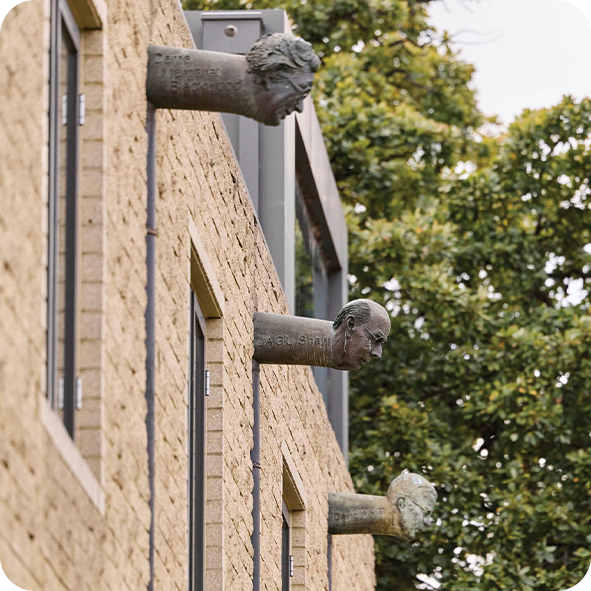
Bronze gargoyles, by Peter Corlett, 1998–2000
The six larger-than-life gargoyles feature eminent Trinity associates David Wells, Valentine Leeper, George William Rusden, Professor Alan George Lewers Shaw, Dame Margaret Blackwood and Professor Geoffrey Winthrop Leeper.
READ NEXT STORY >>> THE MANY ACTS OF MARNEY MCQUEEN
<<< BACK TO SAINTS & SINNERS
 Built with Shorthand